The Technology Stack Supporting A.I
A.I Infrastructure
Artificial intelligence is quickly becoming one of the defining technologies of our era. It is evolving, into a foundational system, comparable to electricity, telecommunications, or the internet itself.
There is also a deep transformation taking place in computing, from Static Software to Adaptive Intelligence.
Traditional software worked through fixed instructions. Humans wrote code, defined rules, and structured information into databases that machines could process predictably.
AI introduces an entirely different approach.
A Turning Point
Modern AI systems can interpret unstructured information naturally. They can analyze text, recognize images, process speech, and understand context without requiring every piece of information to be manually organized beforehand.
Instead of only executing predefined instructions, AI systems can generate responses dynamically based on the situation presented to them. Each interaction is produced in real time. Responses are shaped by context, intent, and interpretation rather than simply retrieving stored outputs. This marks a major shift in the history of computing.
The Physical Reality
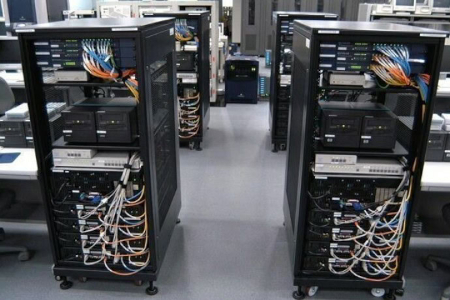
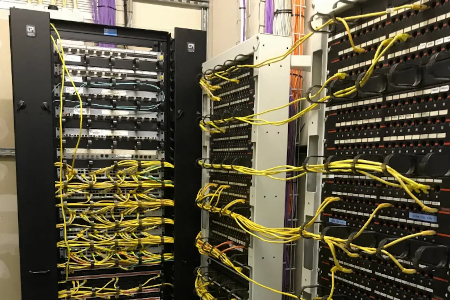
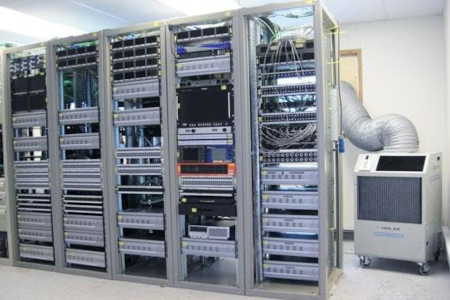
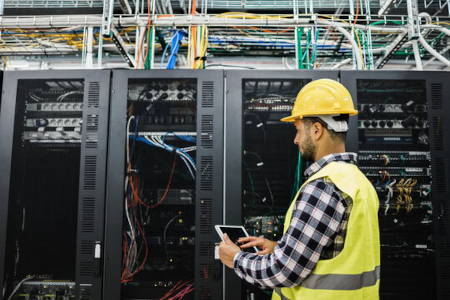
Behind every AI system is a physical reality. AI depends on data centers, semiconductors, electricity, networking infrastructure, and large-scale computation. It transforms energy and hardware into usable intelligence that can operate at global scale.
In time, nearly every industry will rely on it, and every technologically ambitious nation will invest heavily in building it.
Viewed industrially, AI can be understood as a layered system made up of several interconnected foundations
The entire system can be summarized as:
Energy → Chips → Infrastructure → Models → Applications
Every successful AI application depends on all the layers beneath it, ultimately tracing back to the physical energy powering the system.
Related
Performance You Can Measure
We don’t just deliver a website—we deliver a measurable impact:
With us, you don't just get unwavering service reliability, backed by proactive monitoring - you get a dependable partner committed to long-term technical excellence.
Project Gallery